
TANGO

what:
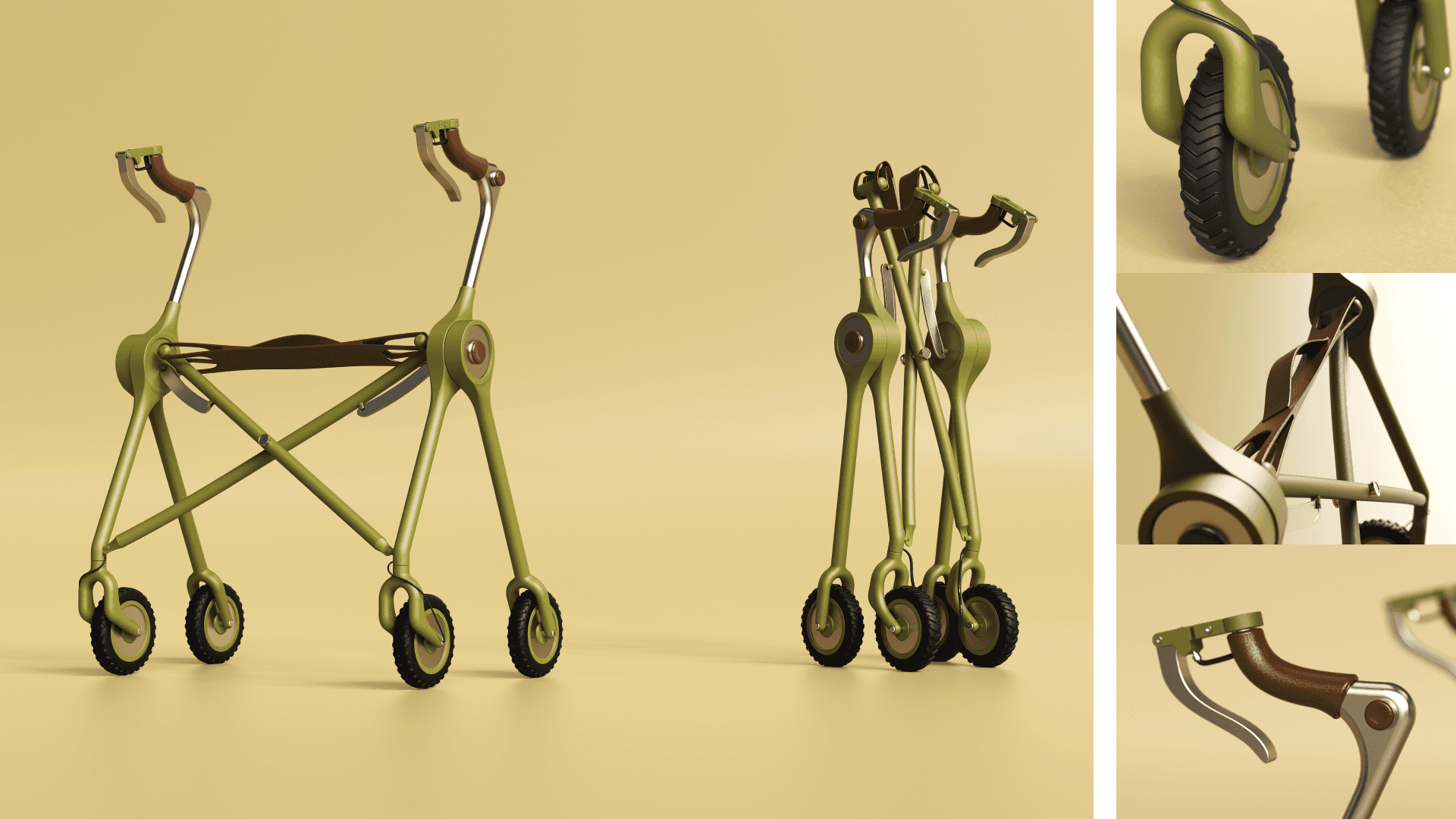
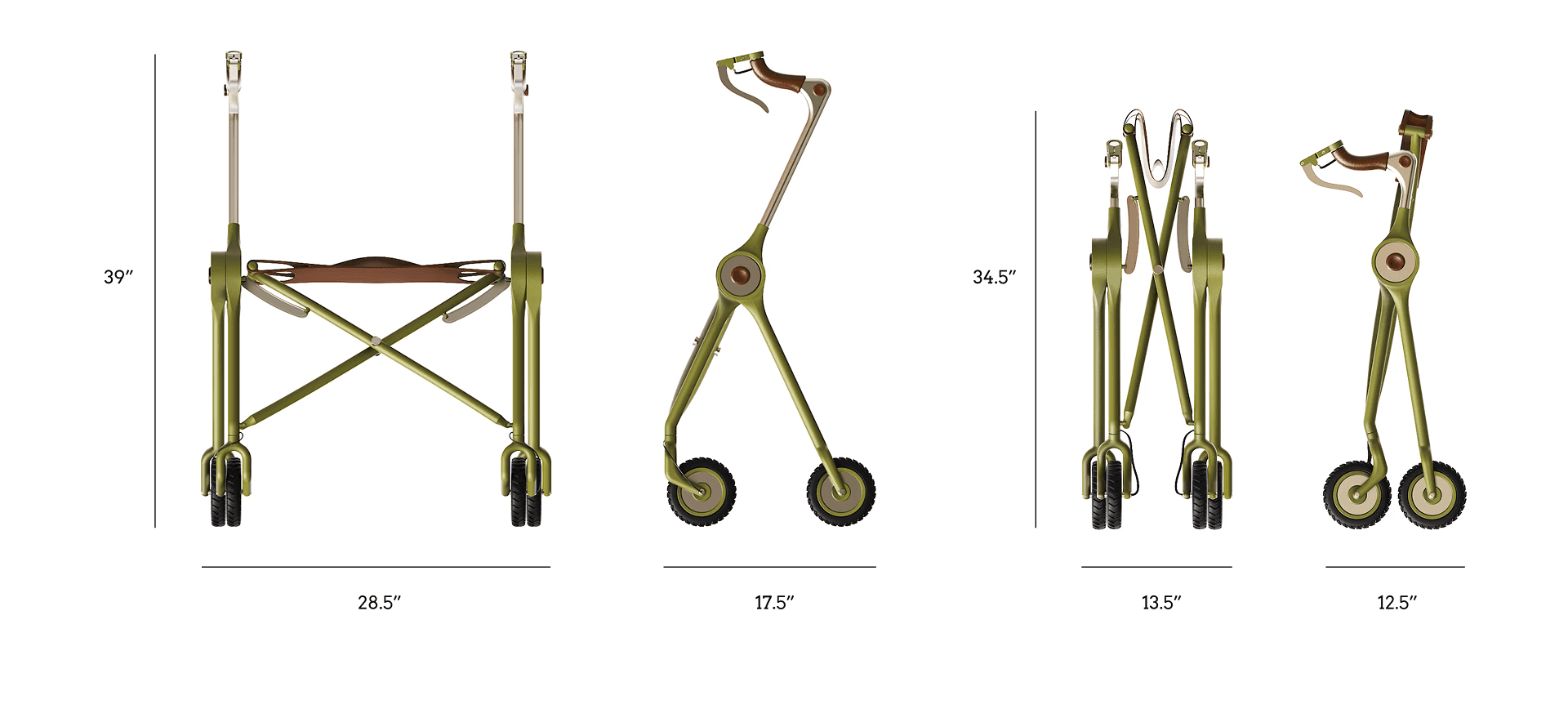
Tango is a redesign of a rollator walker. It focuses on efficient collapsibility and mobility, while looking to address the traditionally neglected aesthetic of the product.
why:
Our main goal was to create a walker for people who want their mobility back. It caters to its audience with low-resistance folding and touch points, and ergonomic grips; we want to take away strain. Walkers are frequently seen as a burden, but they should be seen as an accessory.
who:
This was a partner project, taking place over the course of 7 weeks.
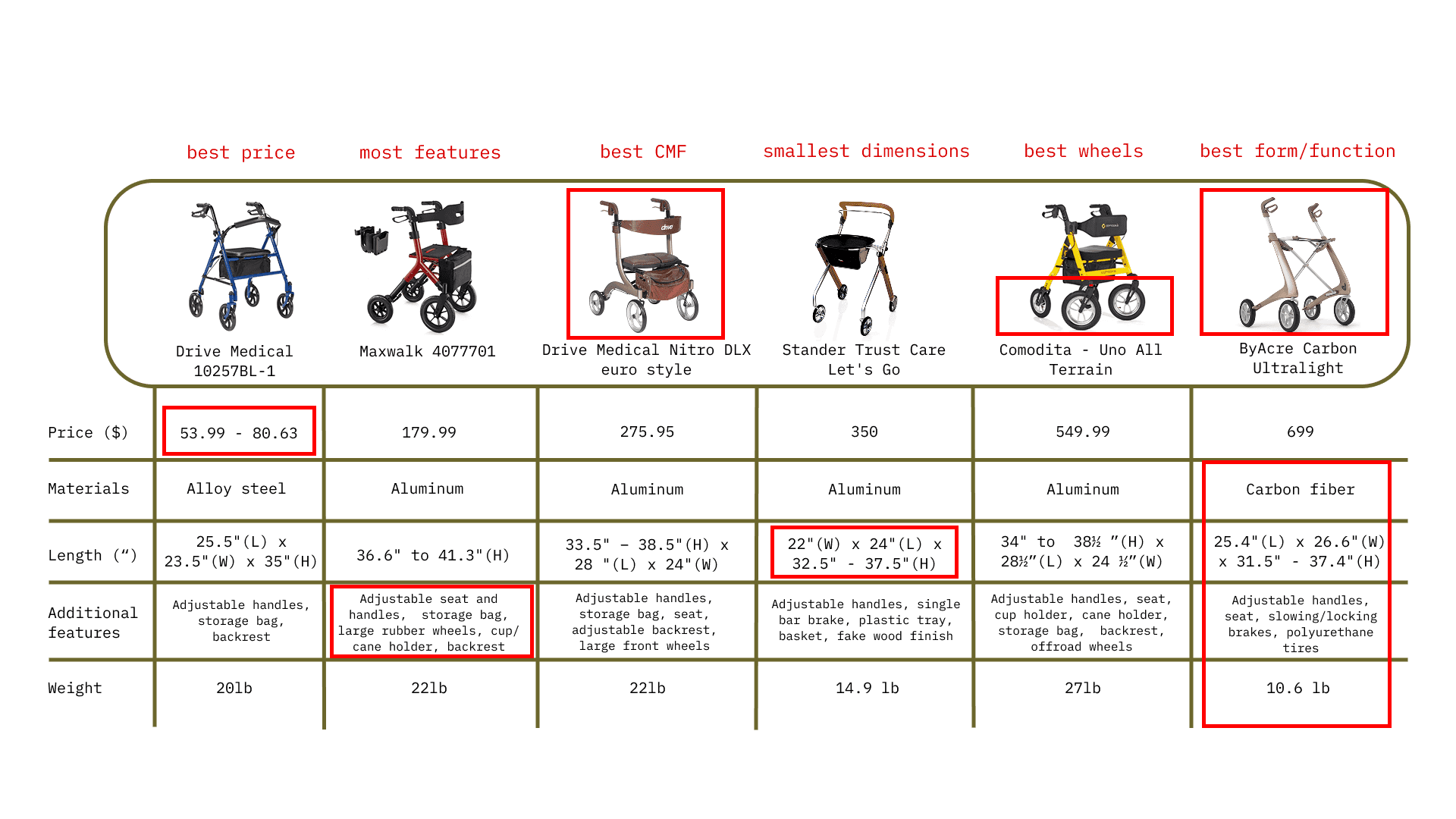
We performed an analysis of the existing rollator walkers on the market.
competitive analysis
THE PAIN POINTS:
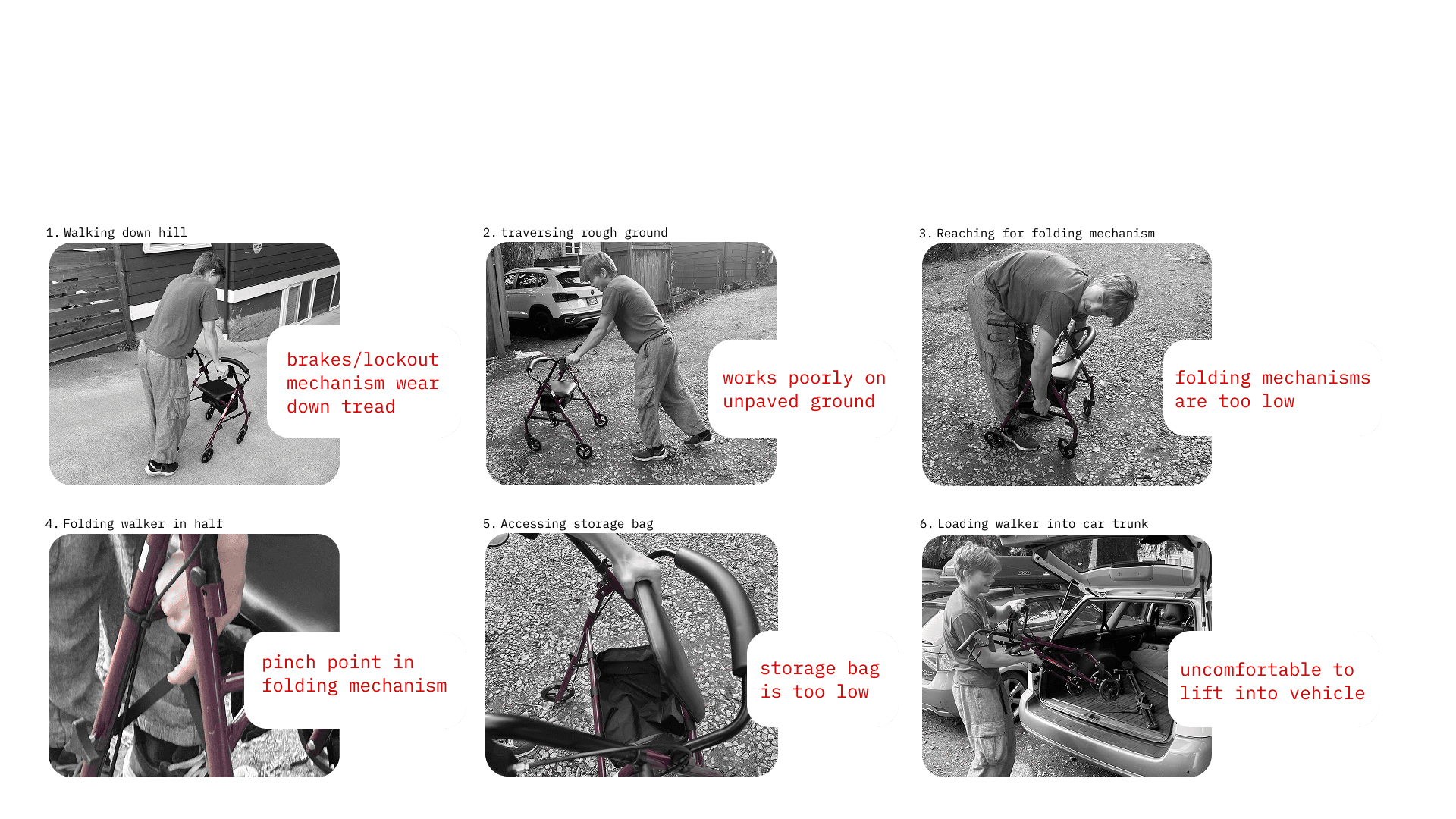
We had a user demonstrate common rollator walker talks and describe the pain points.
task analysis
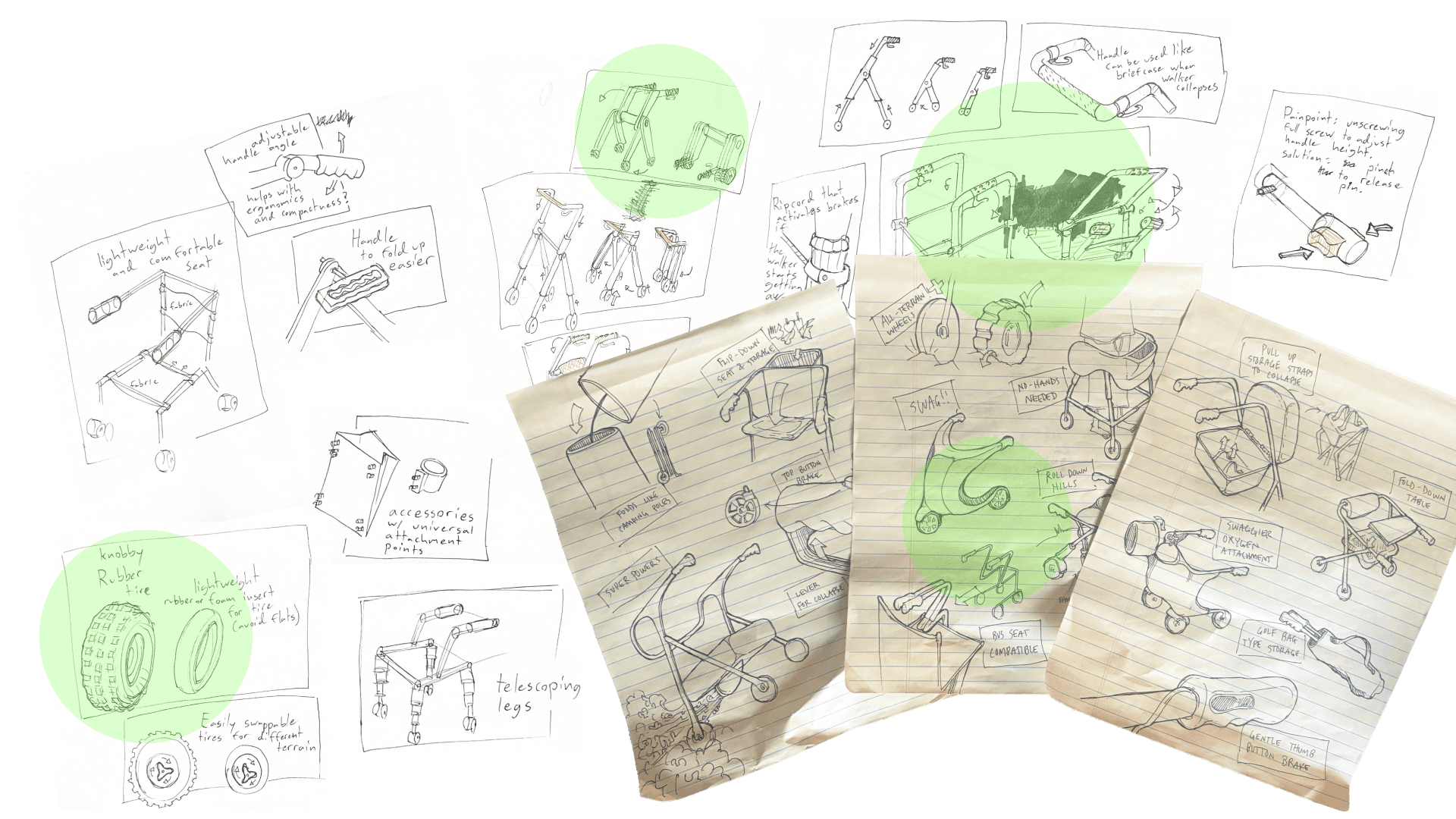
initial sketches
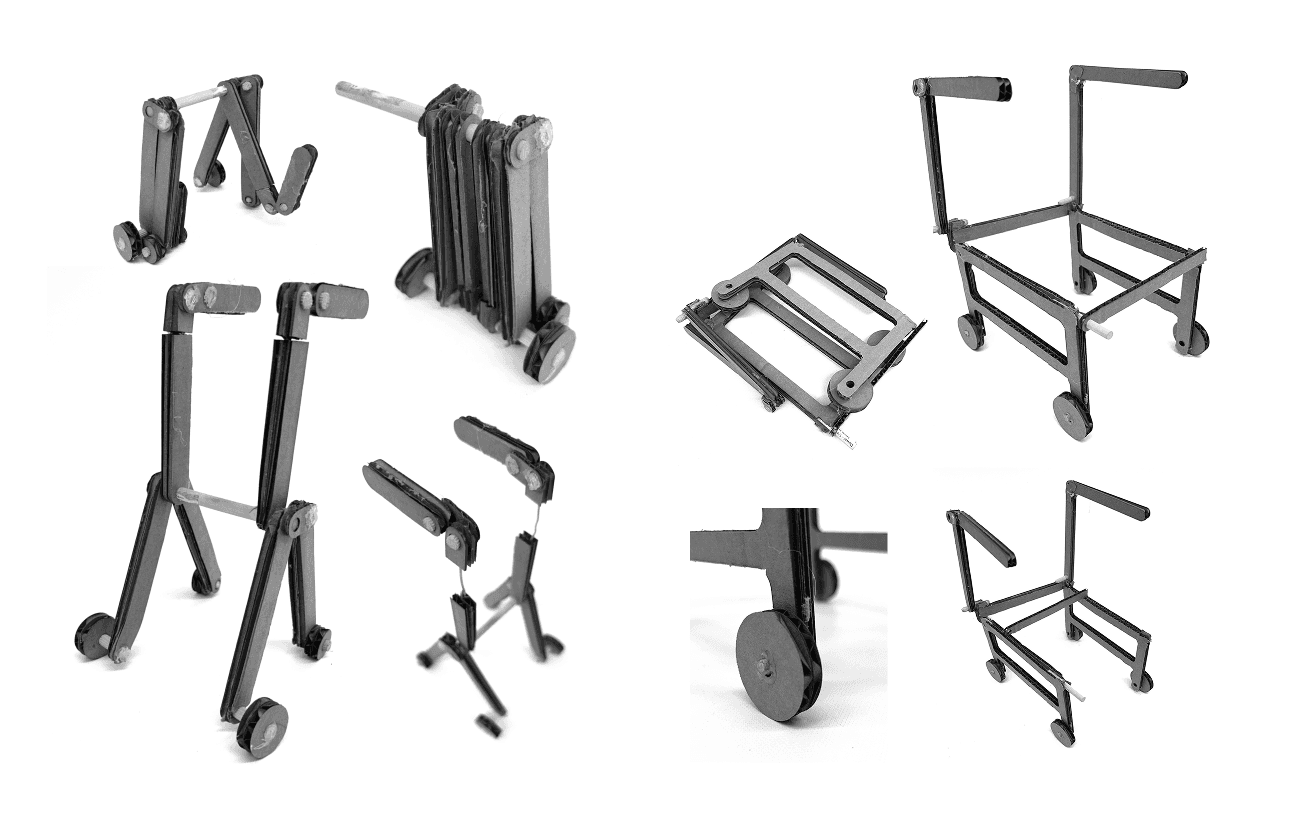
lo-fi prototypes
Simple cardboard models of our favorite
concepts and elements from our initial round of sketches. They focused on the idea of pivoting pieces to reduce the silhouette when collapsing.
1:
Rollators walkers on the market are not compact enough. They don't reduce the walker's footprint nearly enough and they don't collapse efficiently.
2:
Walkers are generally poor on imperfect surfaces. It's difficult to walk and turn.
3:
The tactile elements of walkers are frequently complicated and tricky to use for those with limited physical strength.
4:
Rollators walkers on the market are not compact enough. They don't reduce the walker's footprint nearly enough and they don't collapse efficiently.
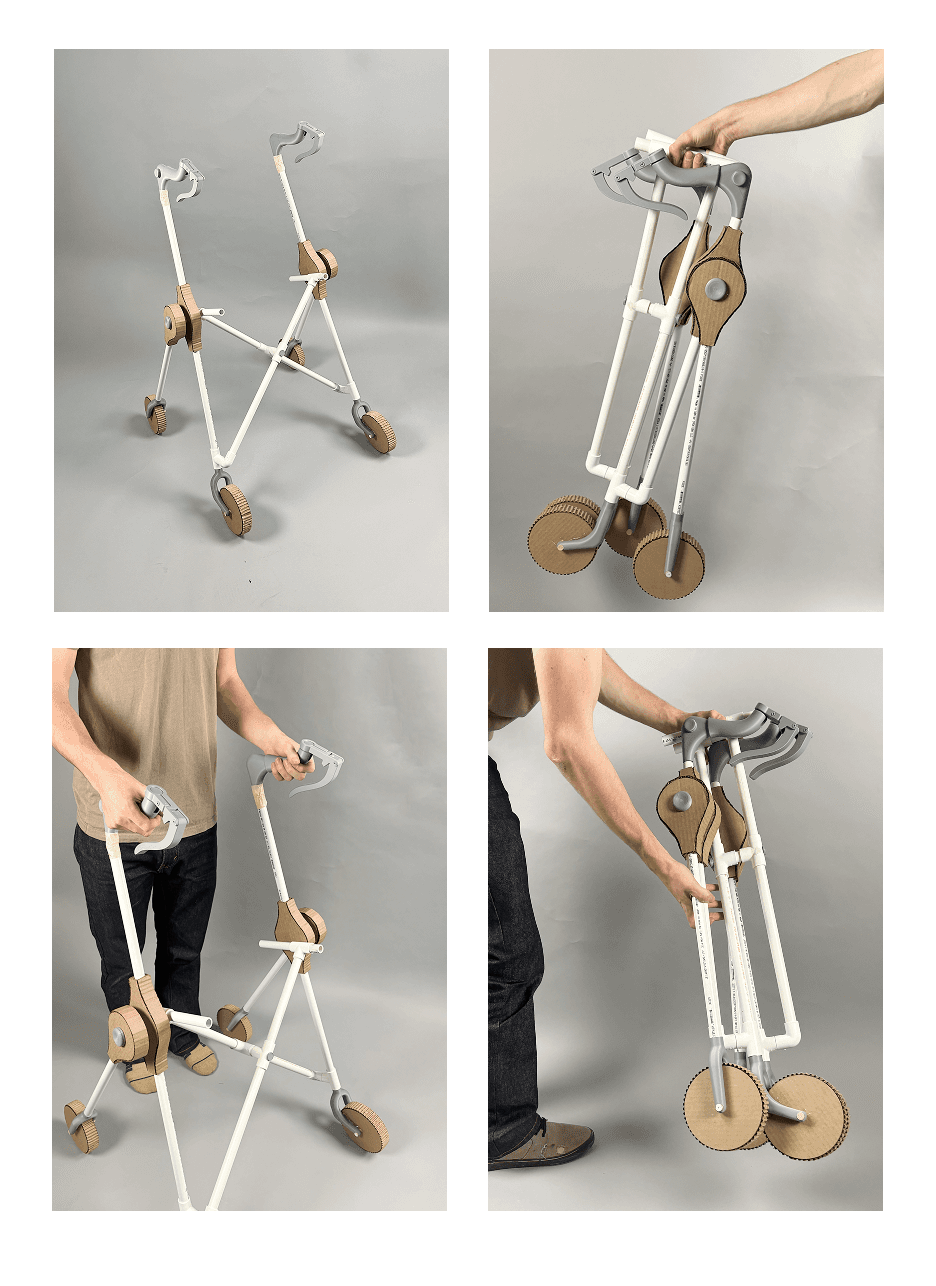
mid-fi prototype
After exploration of form in Rhino, we made a model of
PVC, cardboard, and 3-D printed parts.
walkthrough
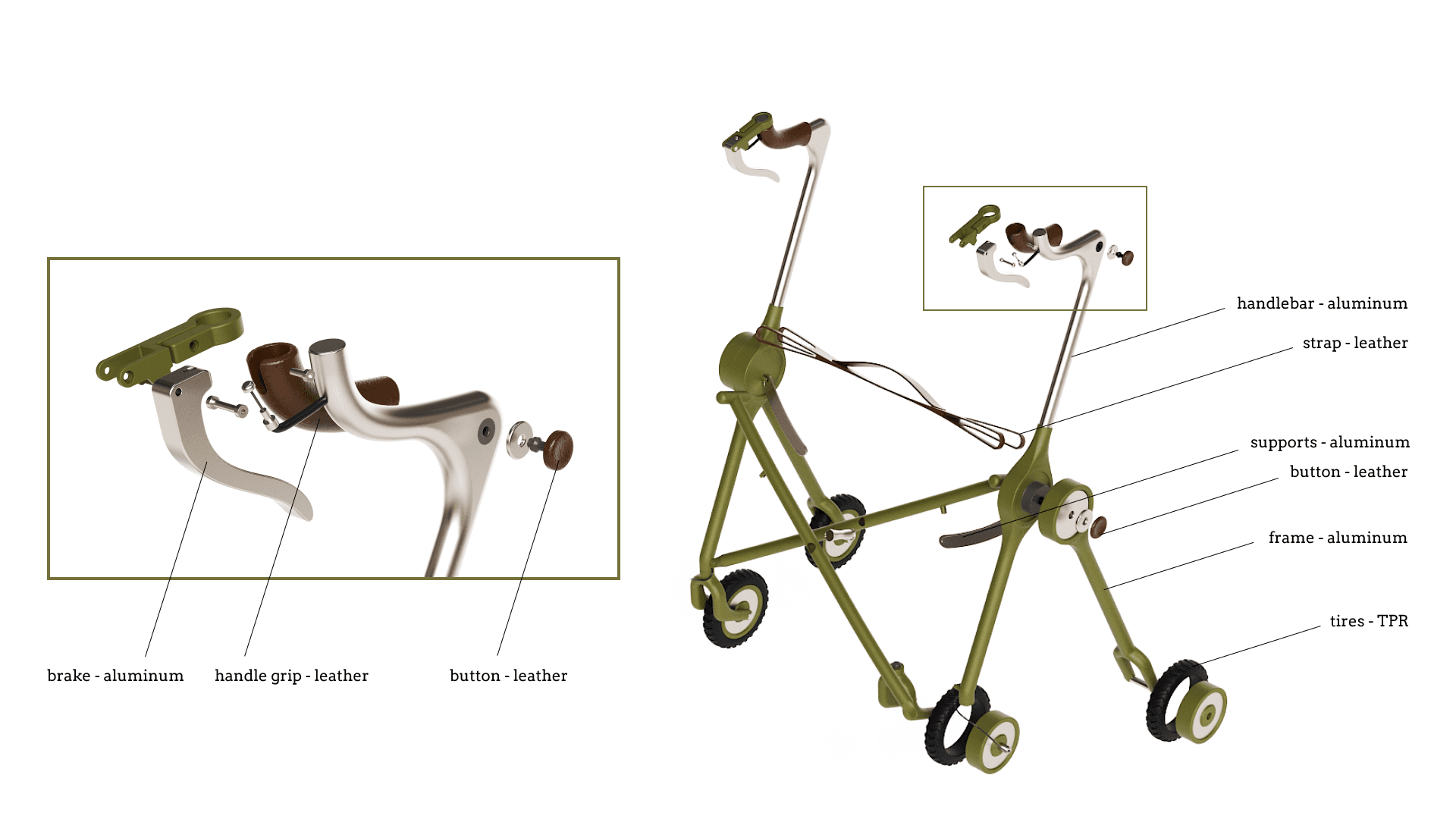
diagram
components &
dimensions
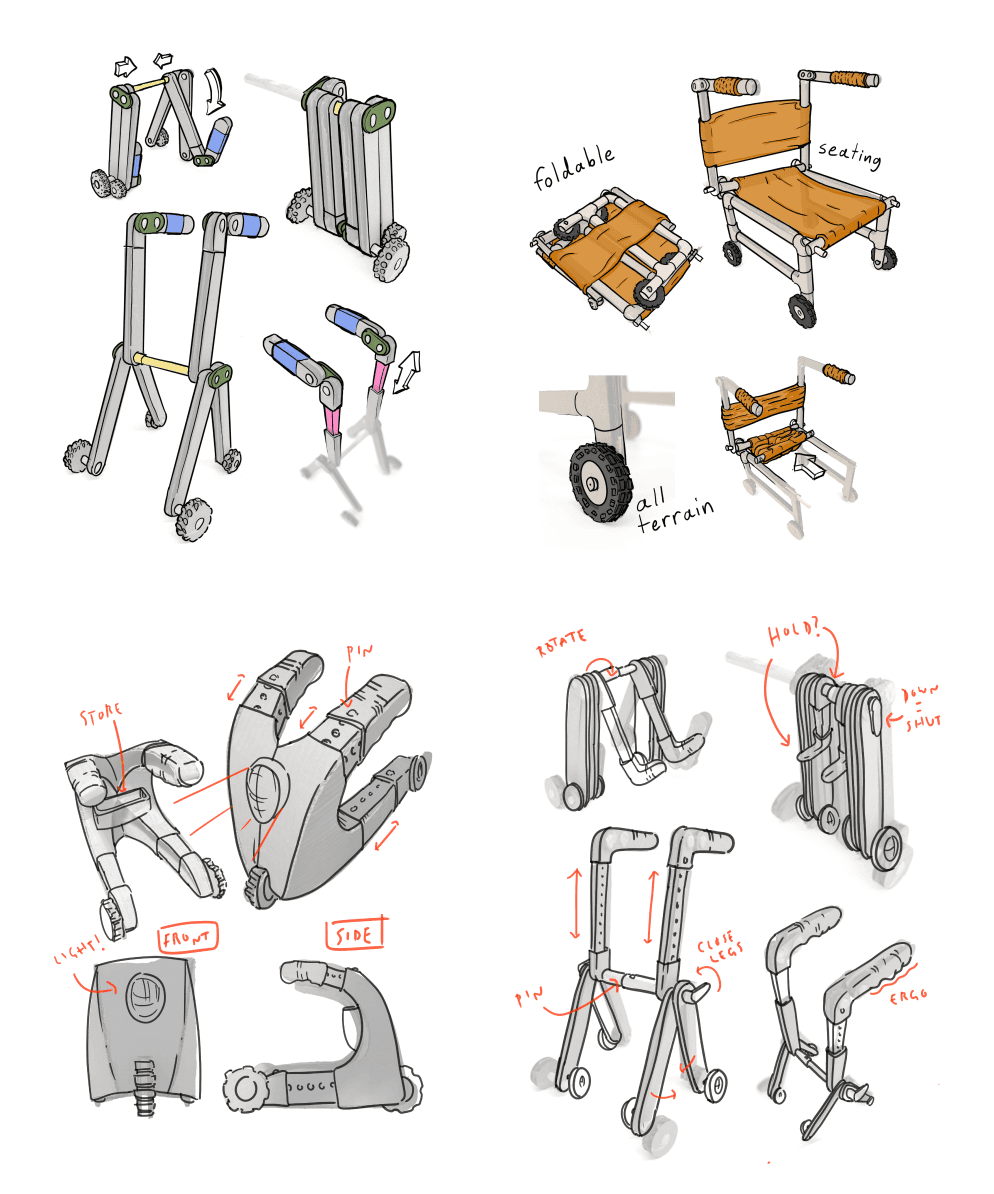
overlay sketches
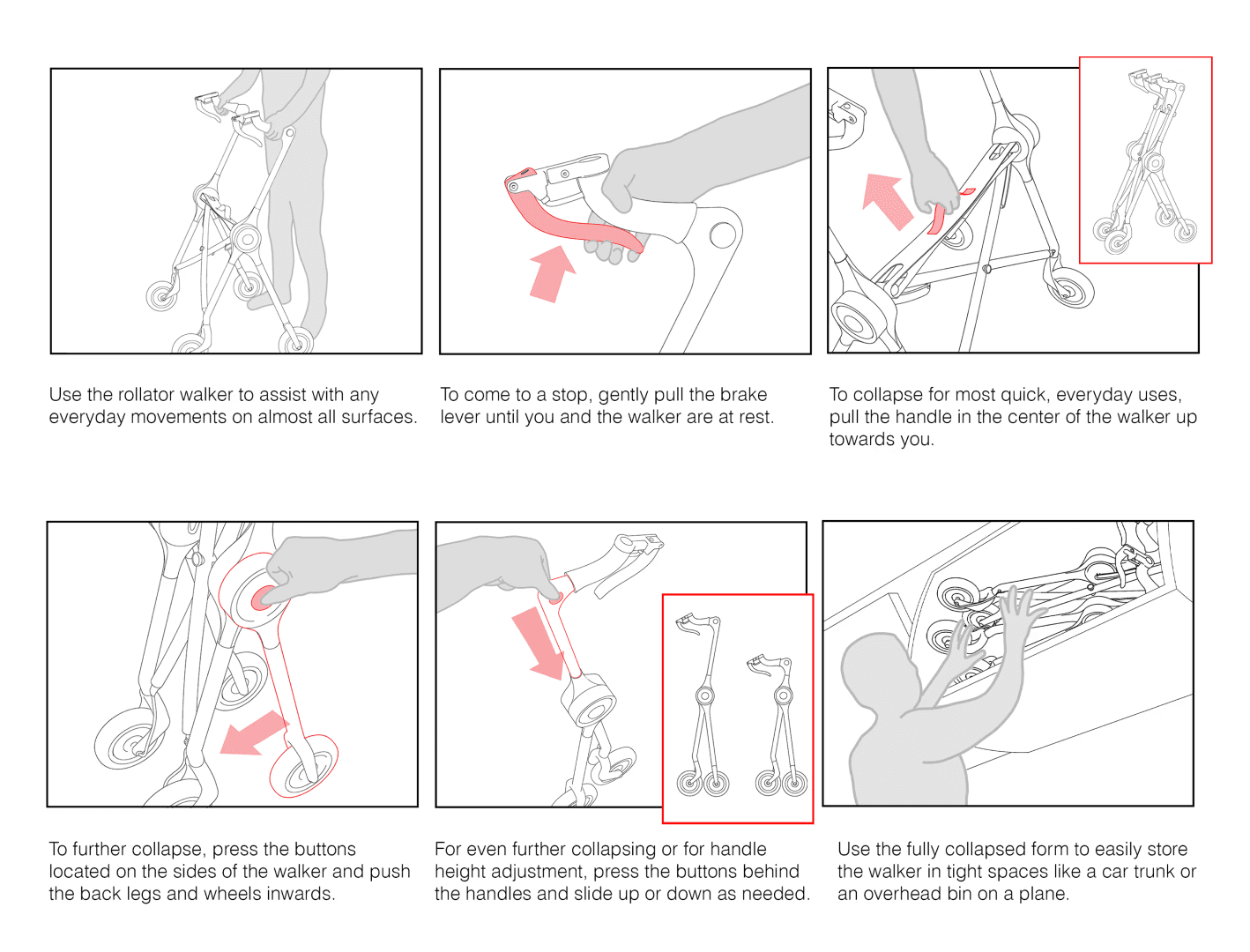
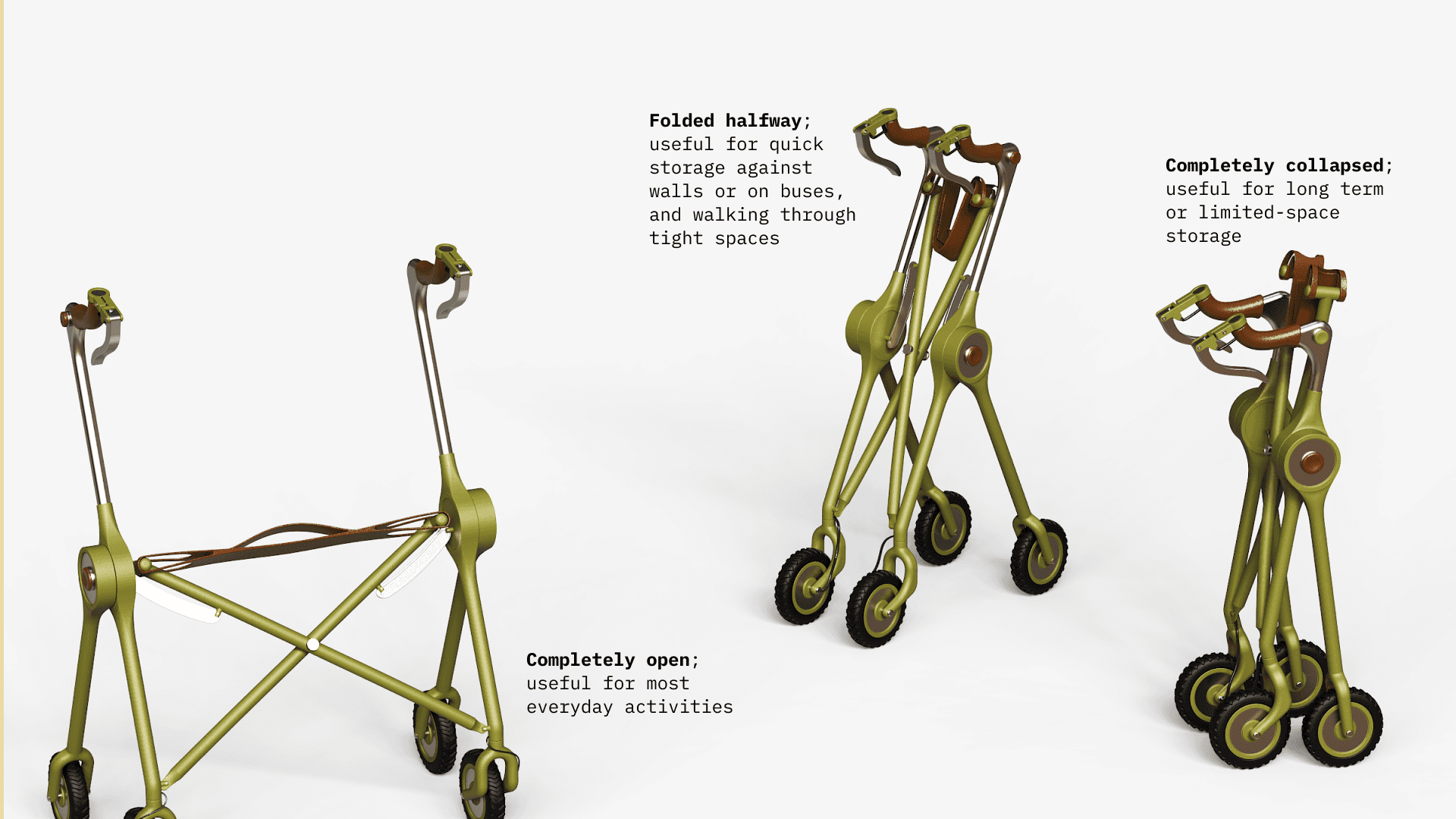
We advanced our prototypes into more detailed sketches. This allowed us to move forward with a concept where the legs and arms fold around a center axis. We felt it was the most efficient, and simplest to understand folding mechanism.

next
BACK TO TOP
TANGO
what:
Tango is a redesign of a rollator walker. It focuses on efficient collapsibility and mobility, while looking to address the traditionally neglected aesthetic of the product.
why:
Our main goal was to create a walker for people who want their mobility back. It caters to its audience with low-resistance folding and touch points, and ergonomic grips; we want to take away strain. Walkers are frequently seen as a burden, but they should be seen as an accessory.
who:
This was a partner project, taking place over the course of 7 weeks.
We performed an analysis of the existing rollator walkers on the market.
We performed an analysis of the existing rollator walkers on the market.
competitive analysis
We had a user demonstrate common rollator walker talks and describe the pain points.
task analysis
THE PAIN POINTS:
1:
Rollators walkers on the market are not compact enough. They don't reduce the walker's footprint nearly enough and they don't collapse efficiently.
2:
Walkers are generally poor on imperfect surfaces. It's difficult to walk and turn.
3:
The tactile elements of walkers are frequently complicated and tricky to use for those with limited physical strength.
4:
Rollators walkers on the market are not compact enough. They don't reduce the walker's footprint nearly enough and they don't collapse efficiently.
initial sketches
lo-fi prototypes
Simple cardboard models of our favorite concepts and elements from our initial round of sketches. They focused on the idea of pivoting pieces to reduce the silhouette when collapsing.
overlay sketches
We advanced our prototypes into more detailed sketches. This allowed us to move forward with a concept where the legs and arms fold around a center axis. We felt it was the most efficient, and simplest to understand folding mechanism.
mid-fi prototype
After exploration of form in Rhino, we made a model of PVC, cardboard, and 3D printed parts.
walkthrough
diagram
components &
dimensions
next
BACK TO TOP
CASE STUDIES
HOME