MICROPLANE
what:
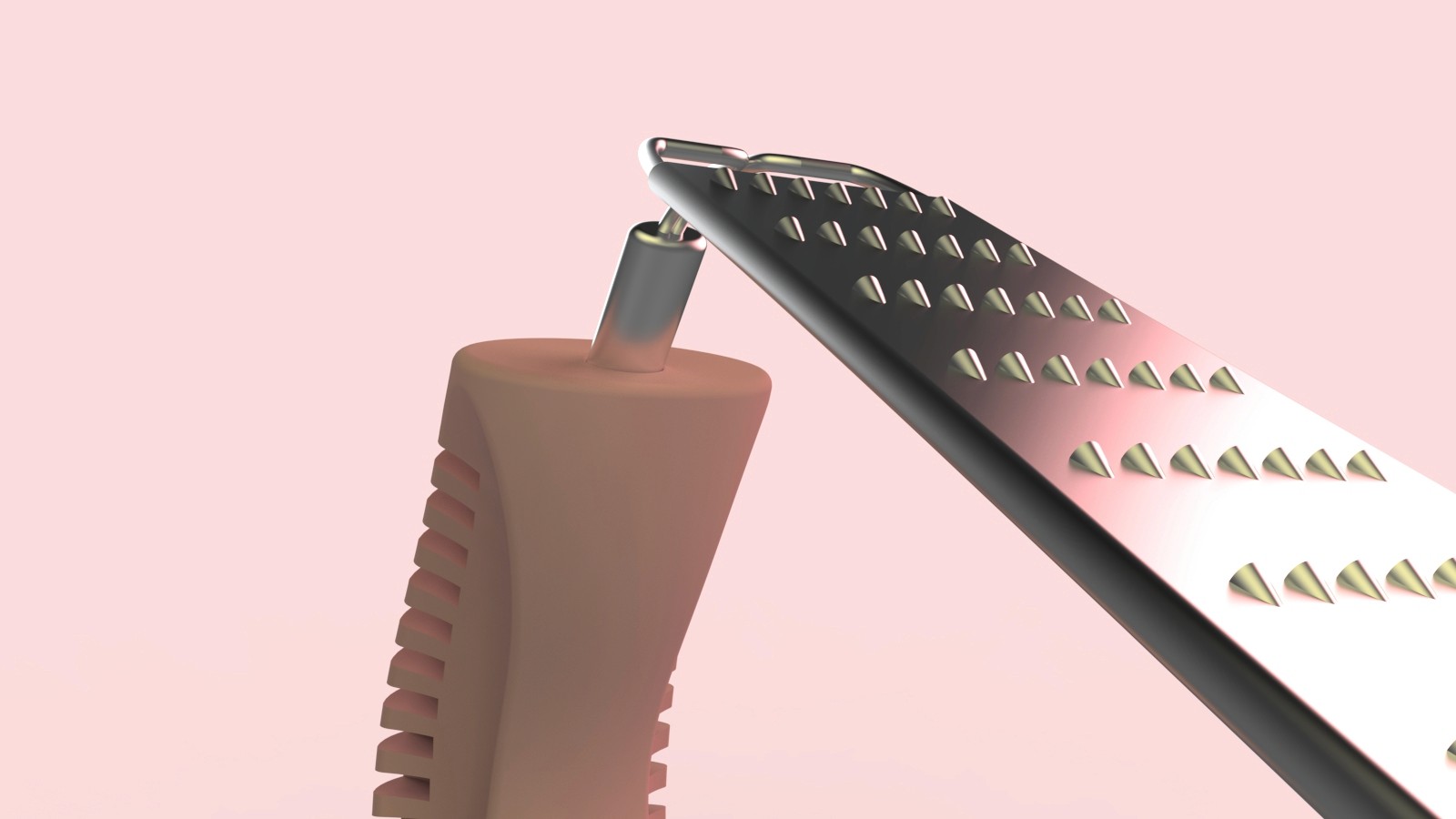
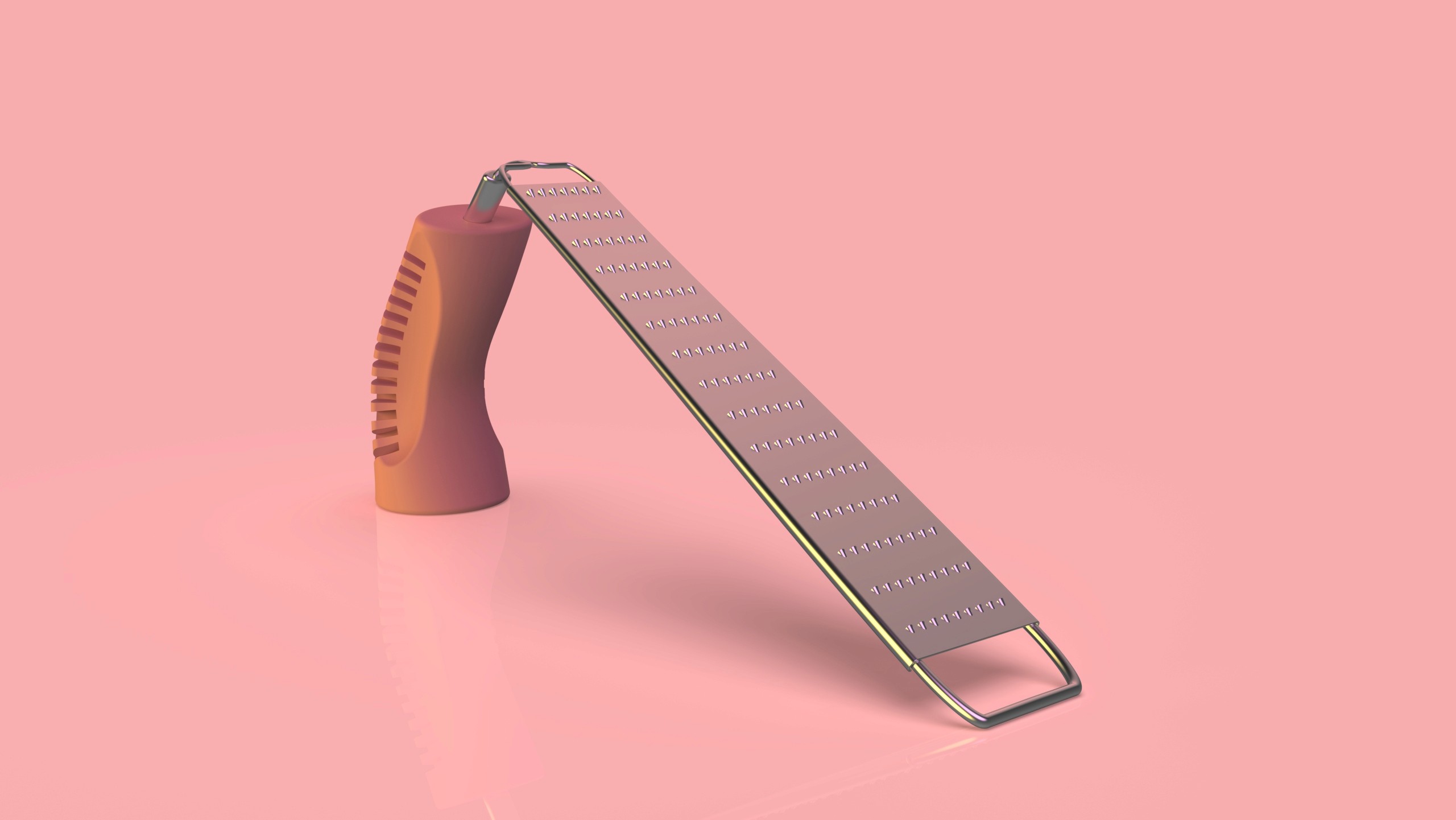
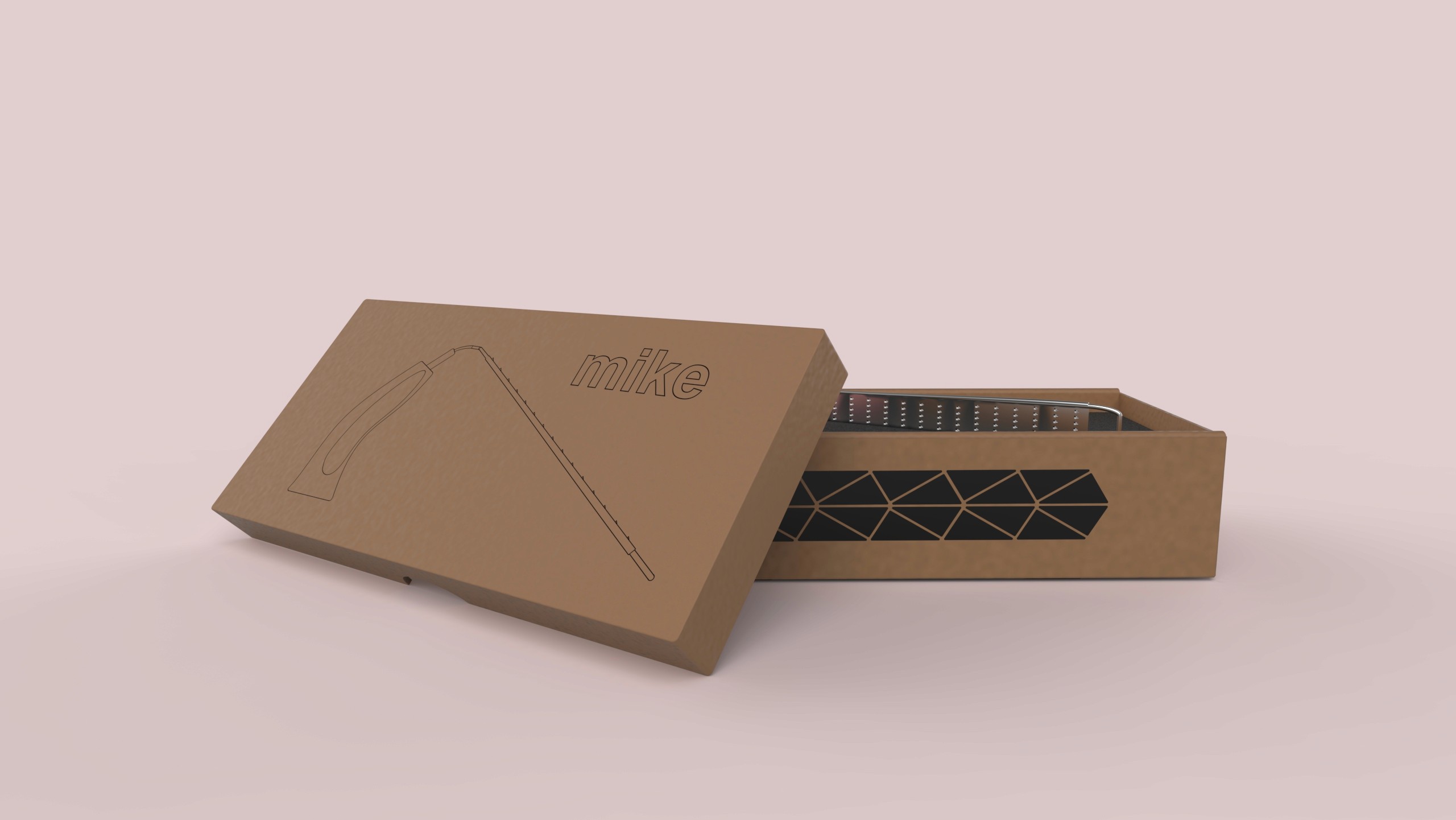
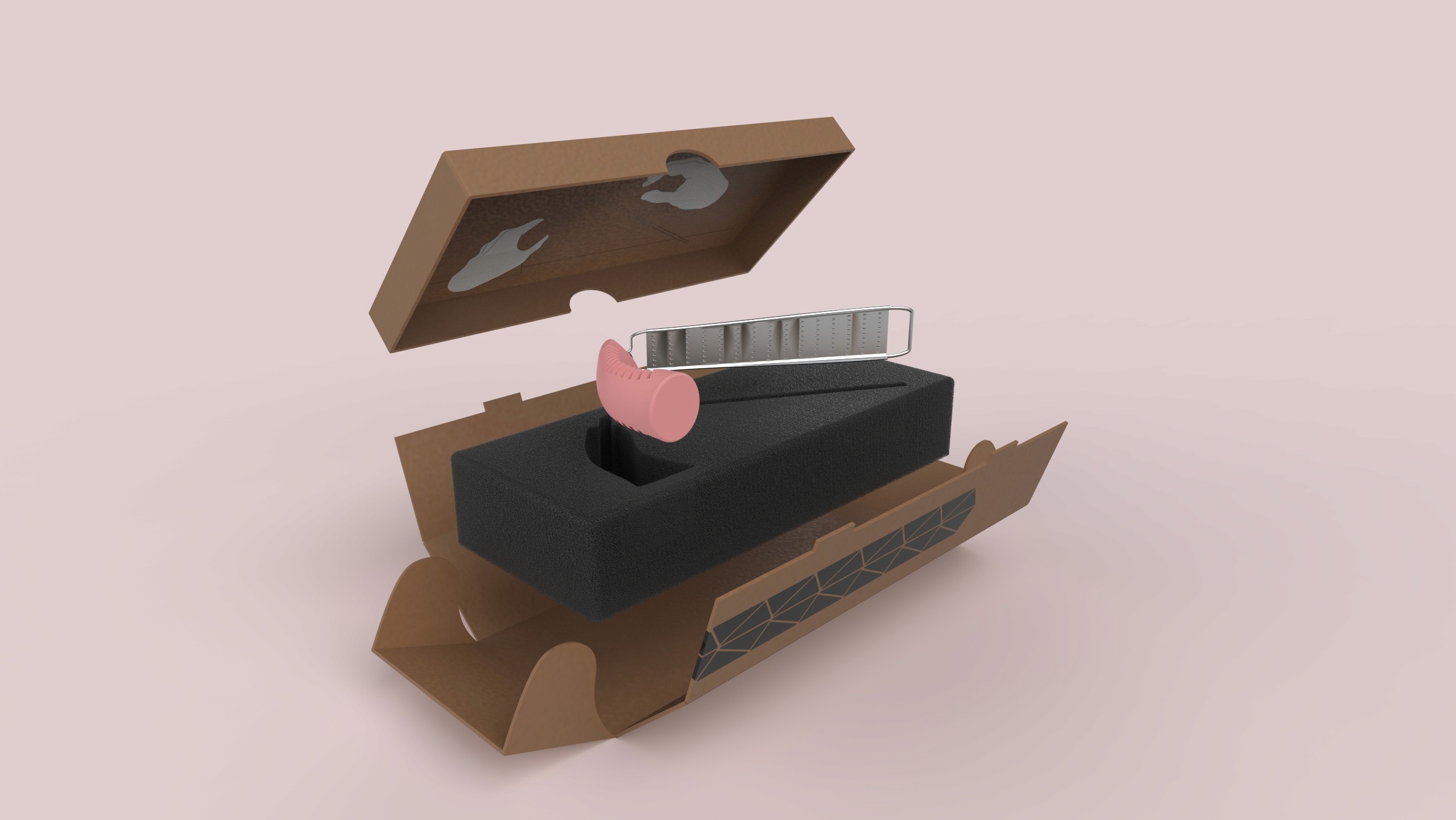
This is a redesign of a classic microplane, used for zesting and finely grating. It aims to address user issues and create a unique take on a pre-existing product
why:
The main intention of the redesign was to address the wrist strain that comes with using a traditional microplane. By having two points of contact with the table, it redirects that strain into the surface it rests on. This increases accessibility of the product and broadens the range of users.
who:
This was a solo project, taking place over the course of 4 weeks.
hand strain
wrist strain
thumb on grates
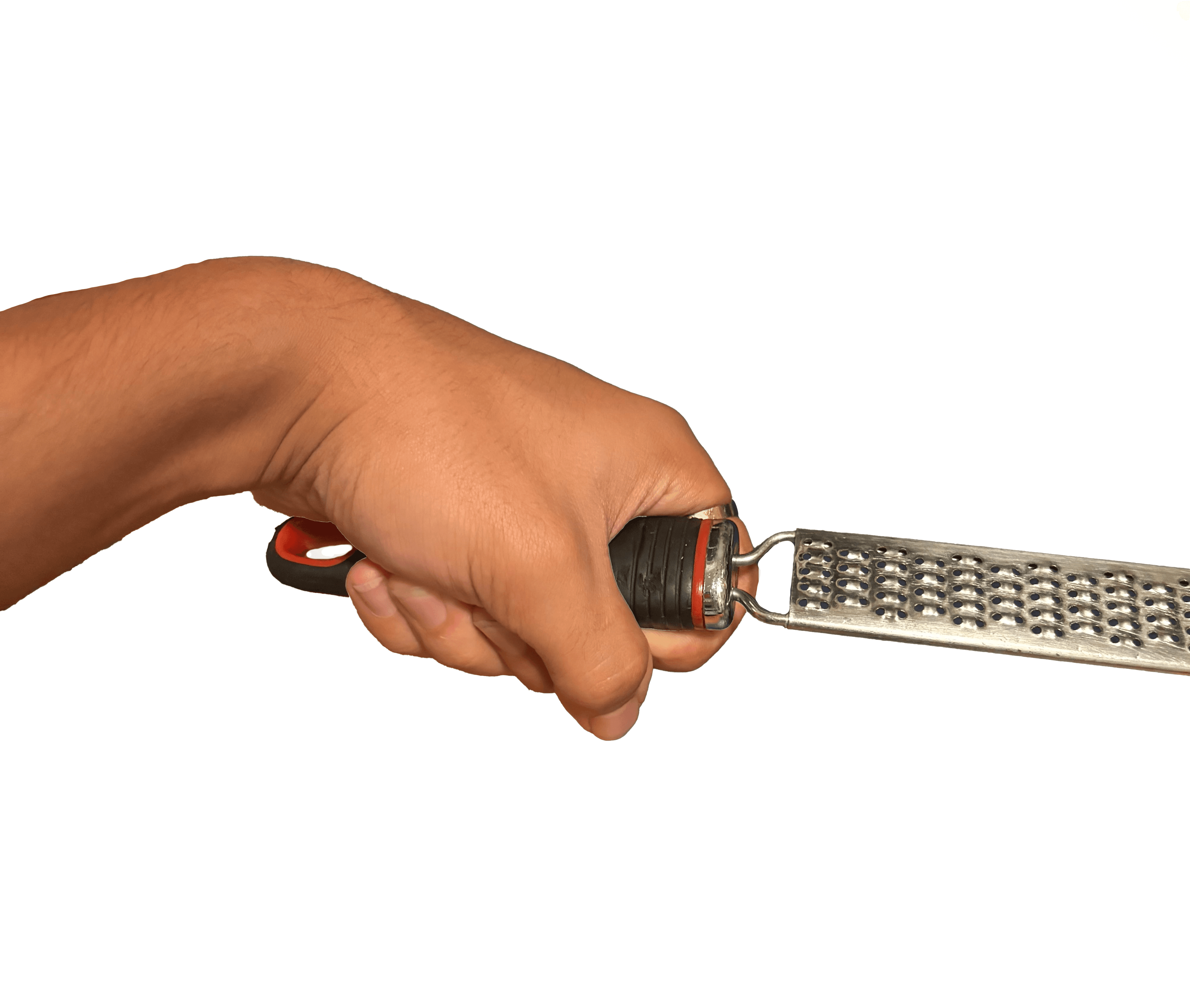
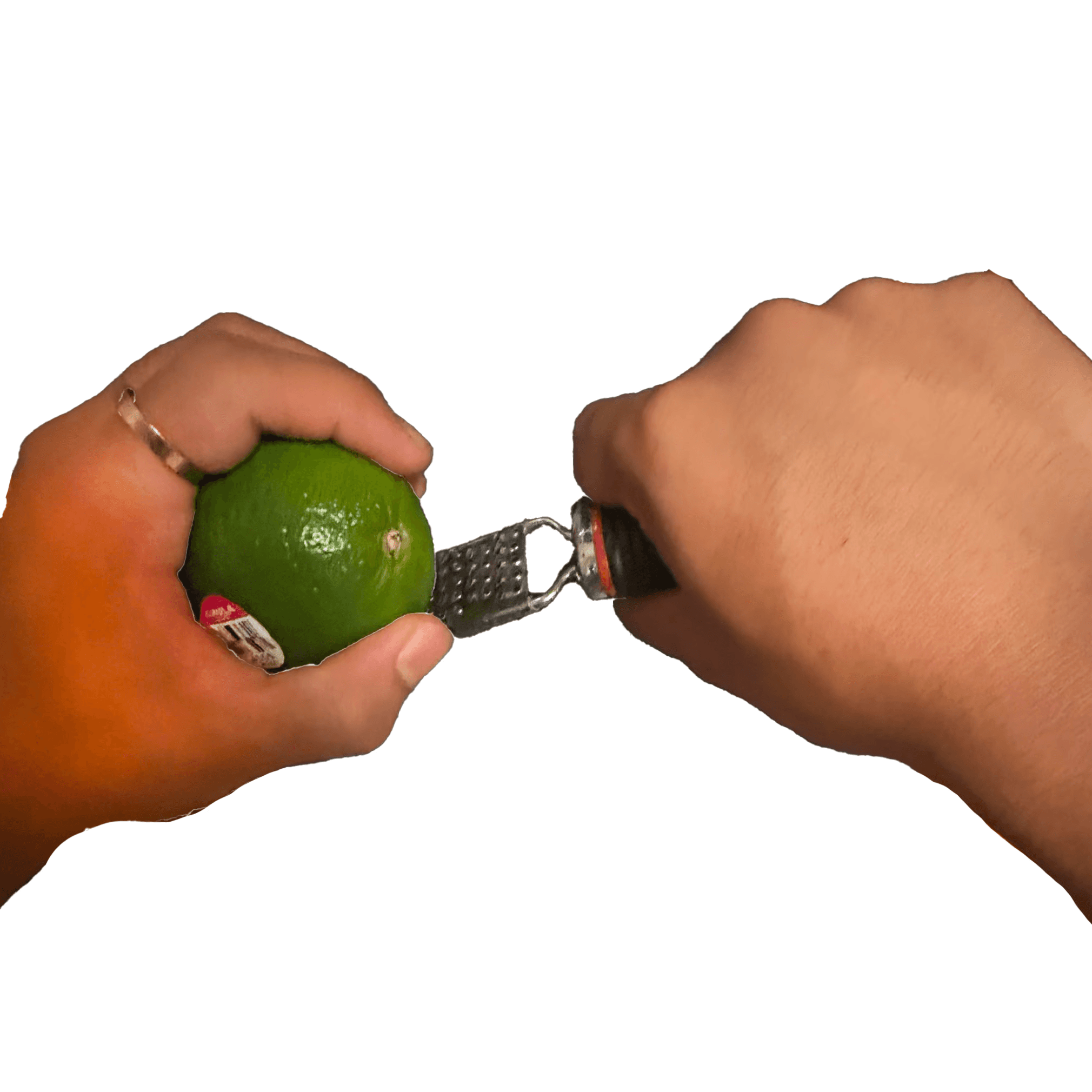
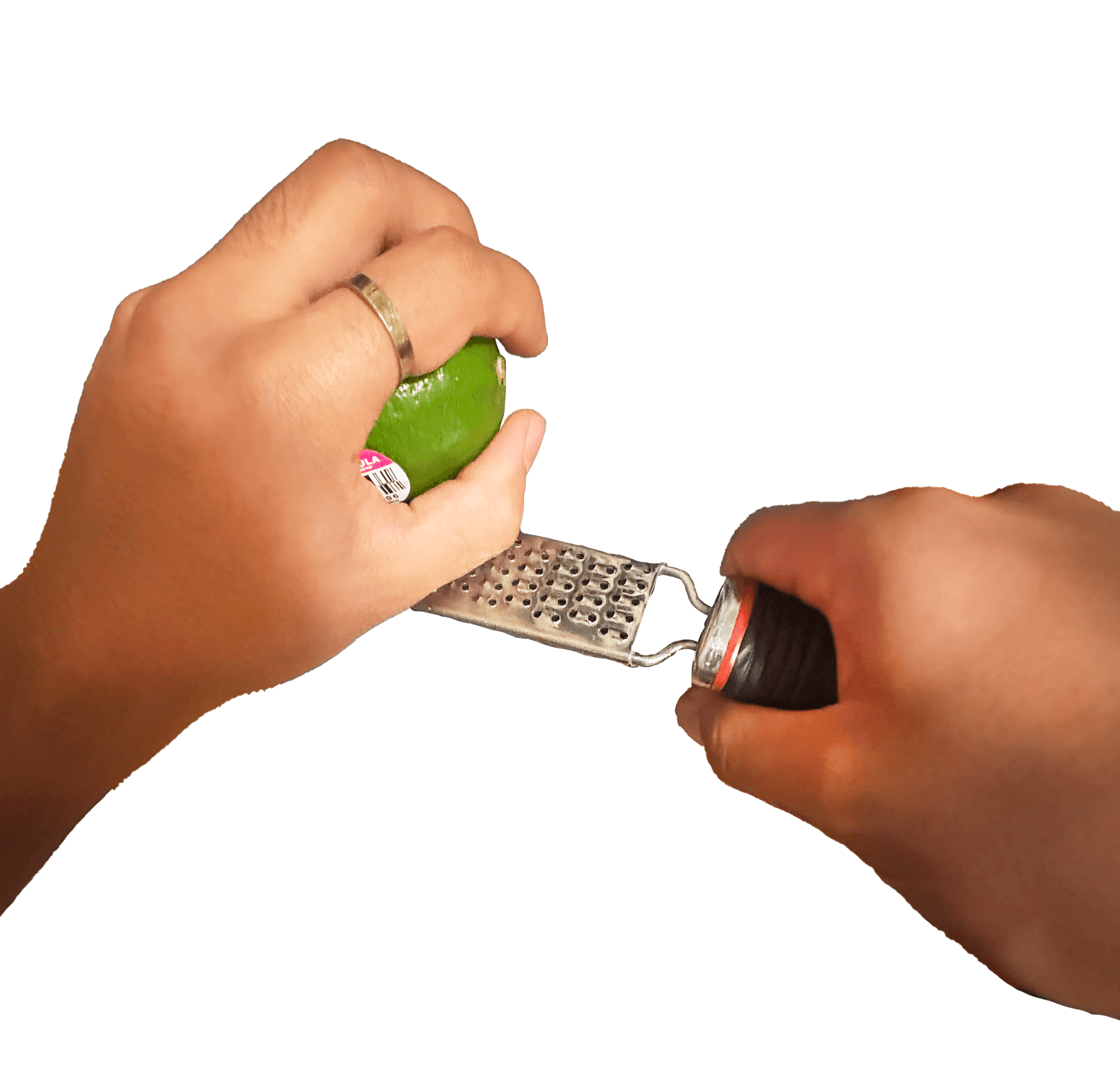
I used a pre-existing microplane to help determine the most prevalent pain points in the product. The biggest issues I found were with physical strain and danger of use.
pain points
Three modifications to the existing microplane to address different pain points; the most effective was the non-slip as it allowed for different angles with high amounts of pressure, but it didn't allow for much further exploration from a design perspective.
product hacks
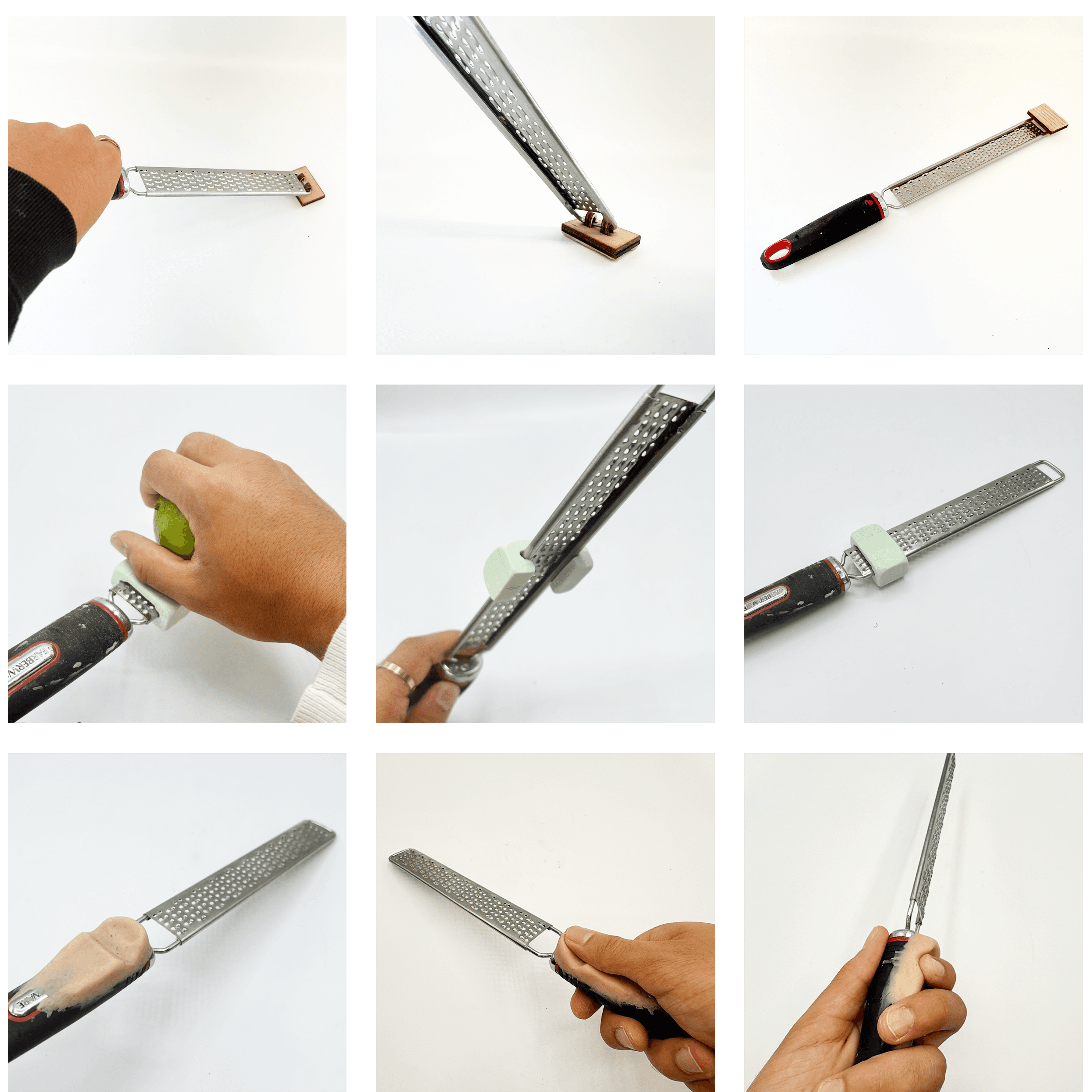
non-slip
thumb protection
two-way grip
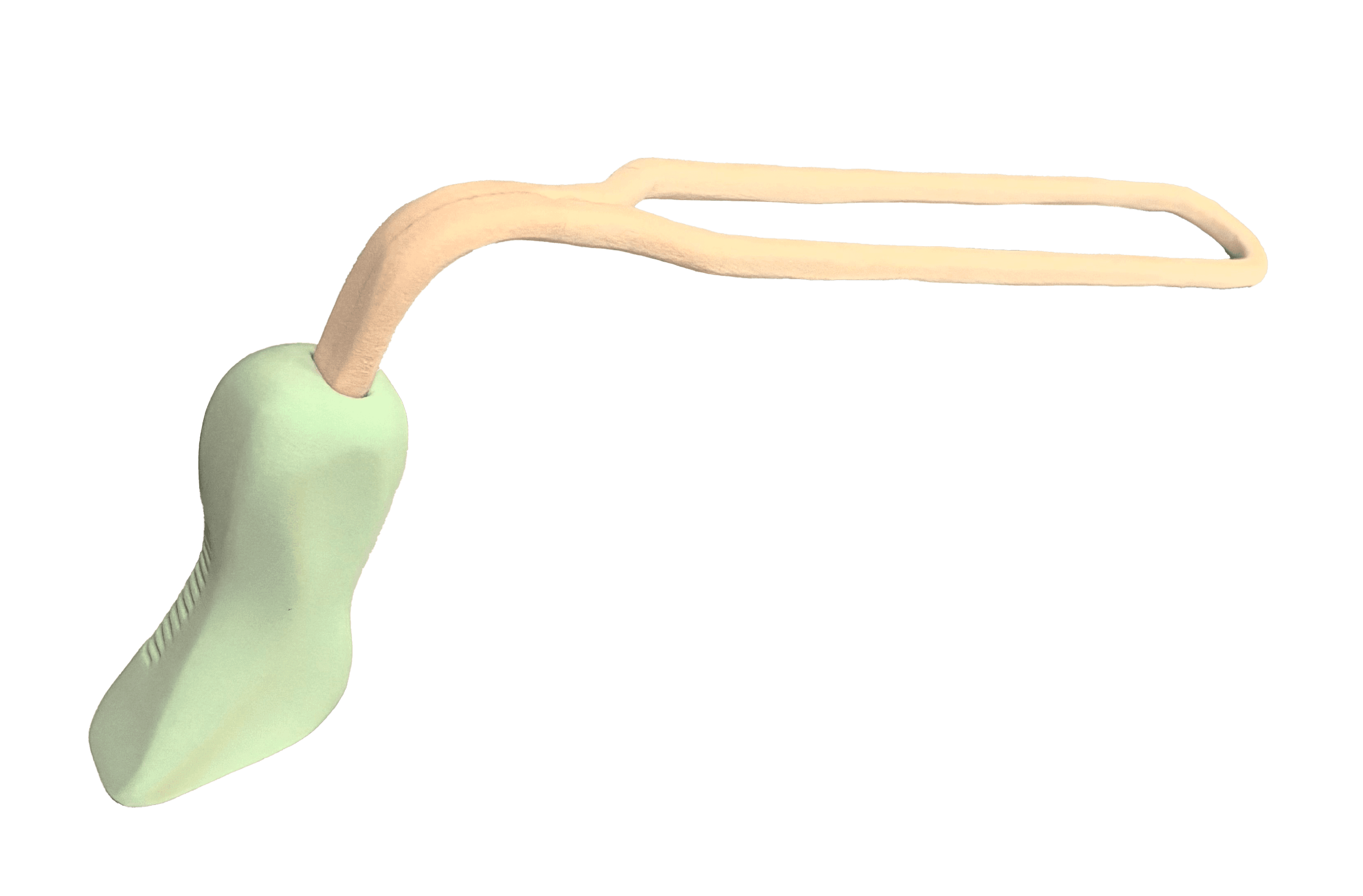
form study cont.
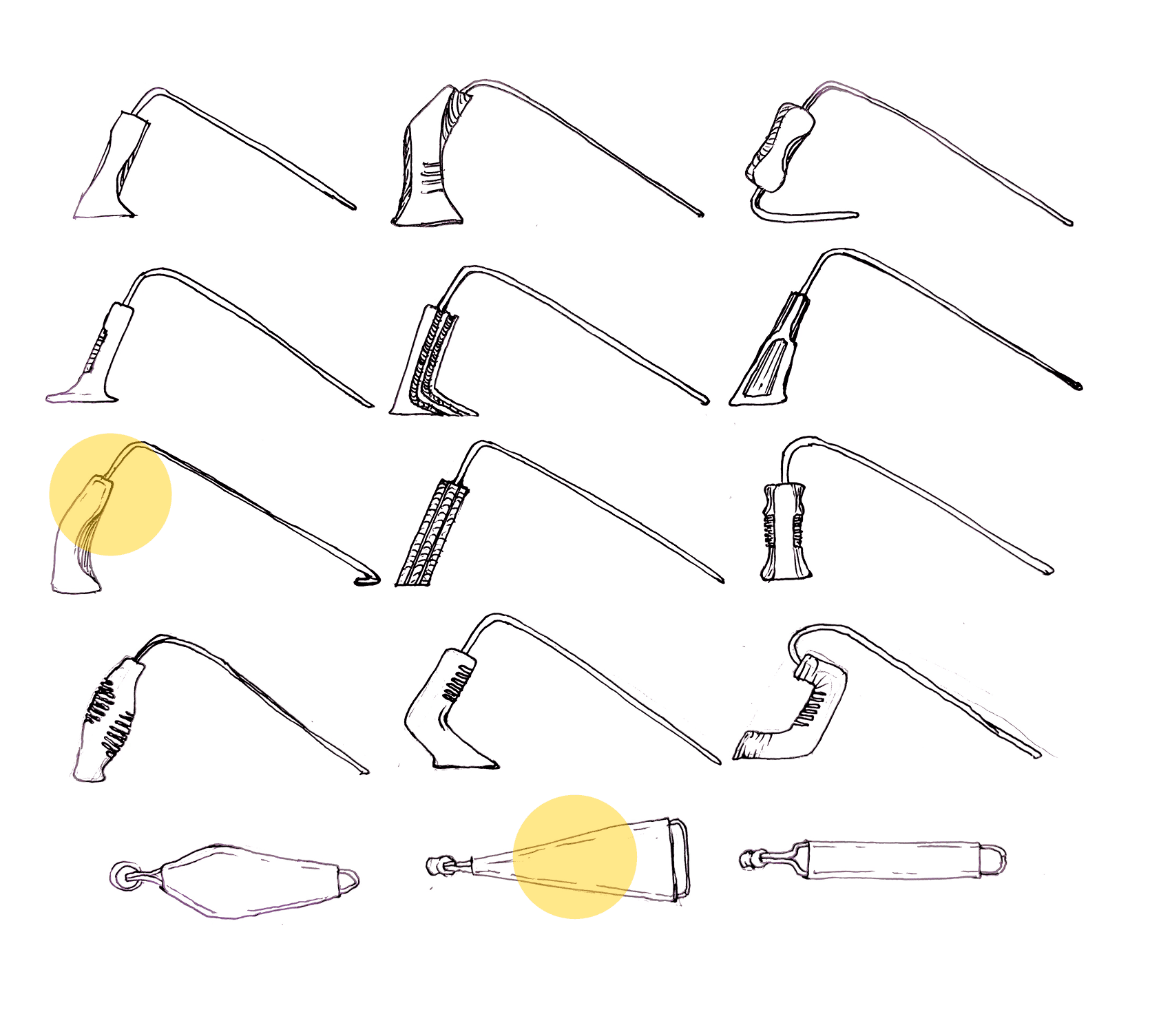
Because of it's unique form and solution to pain points, I finalized a concept of the microplane for use on the table. I explored the form more through rapid sketch visualization.
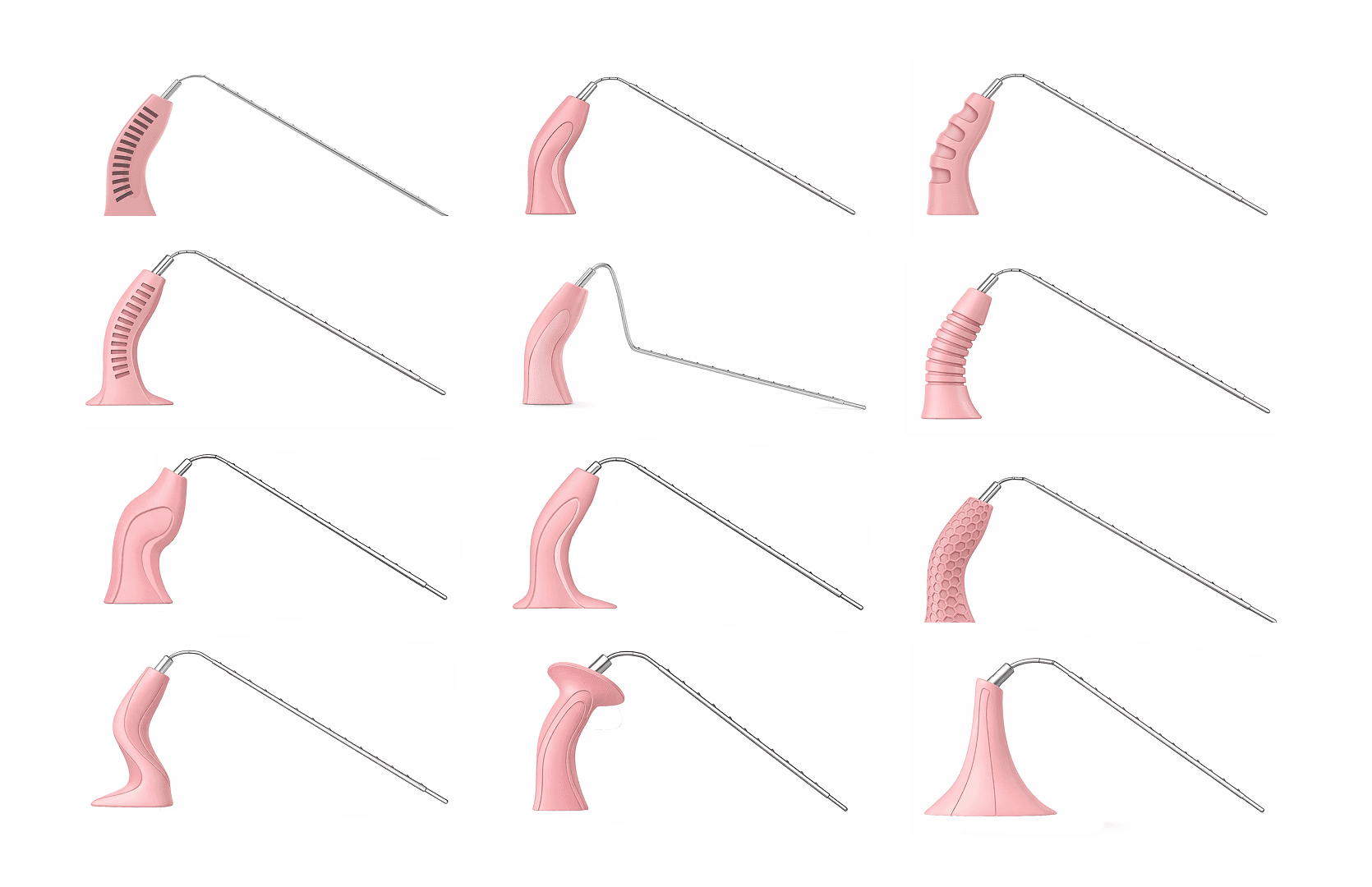
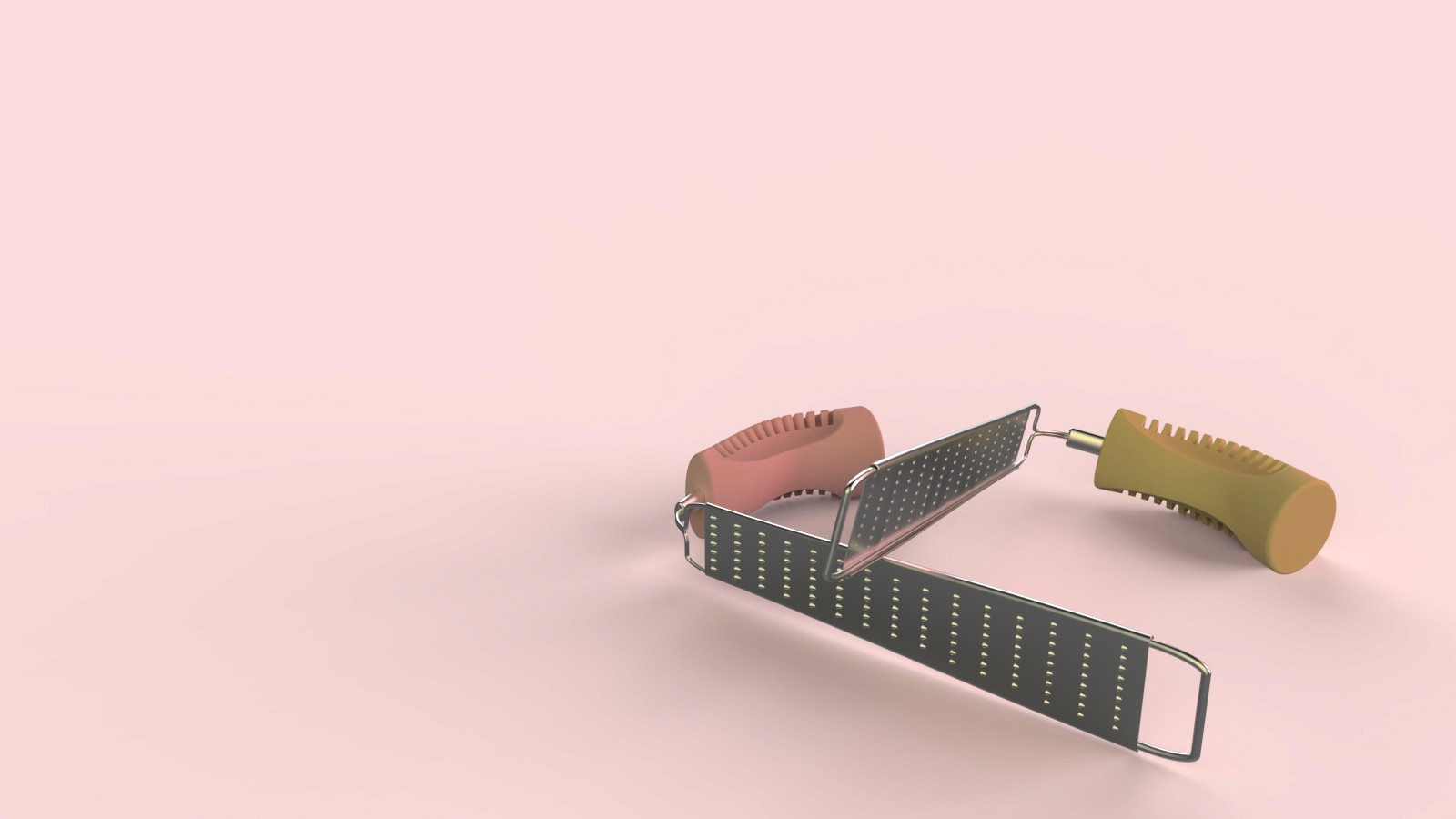
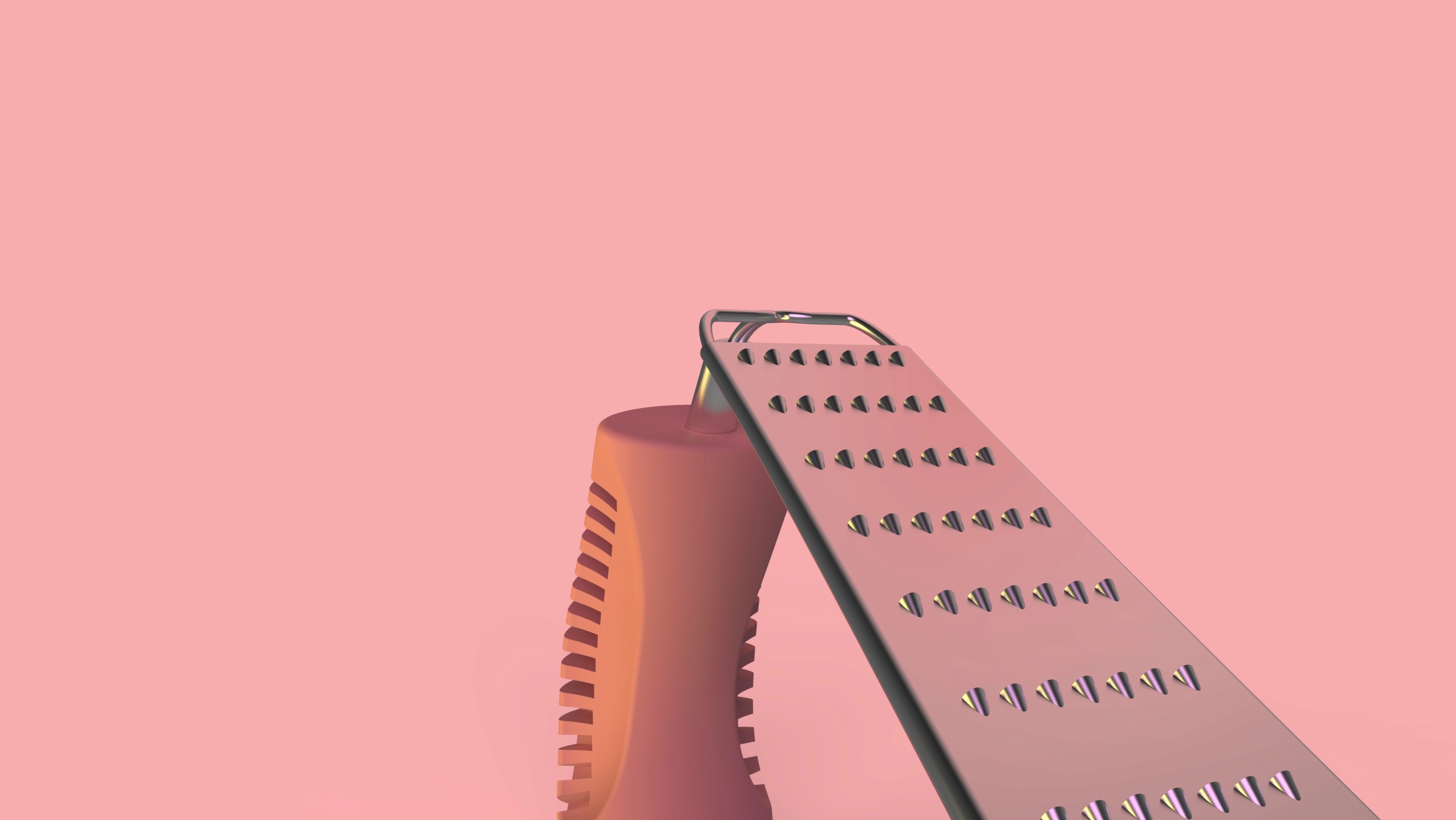
I then progressed onto rapid visualization in rendered form to get a clearer idea of how concepts might manifest.

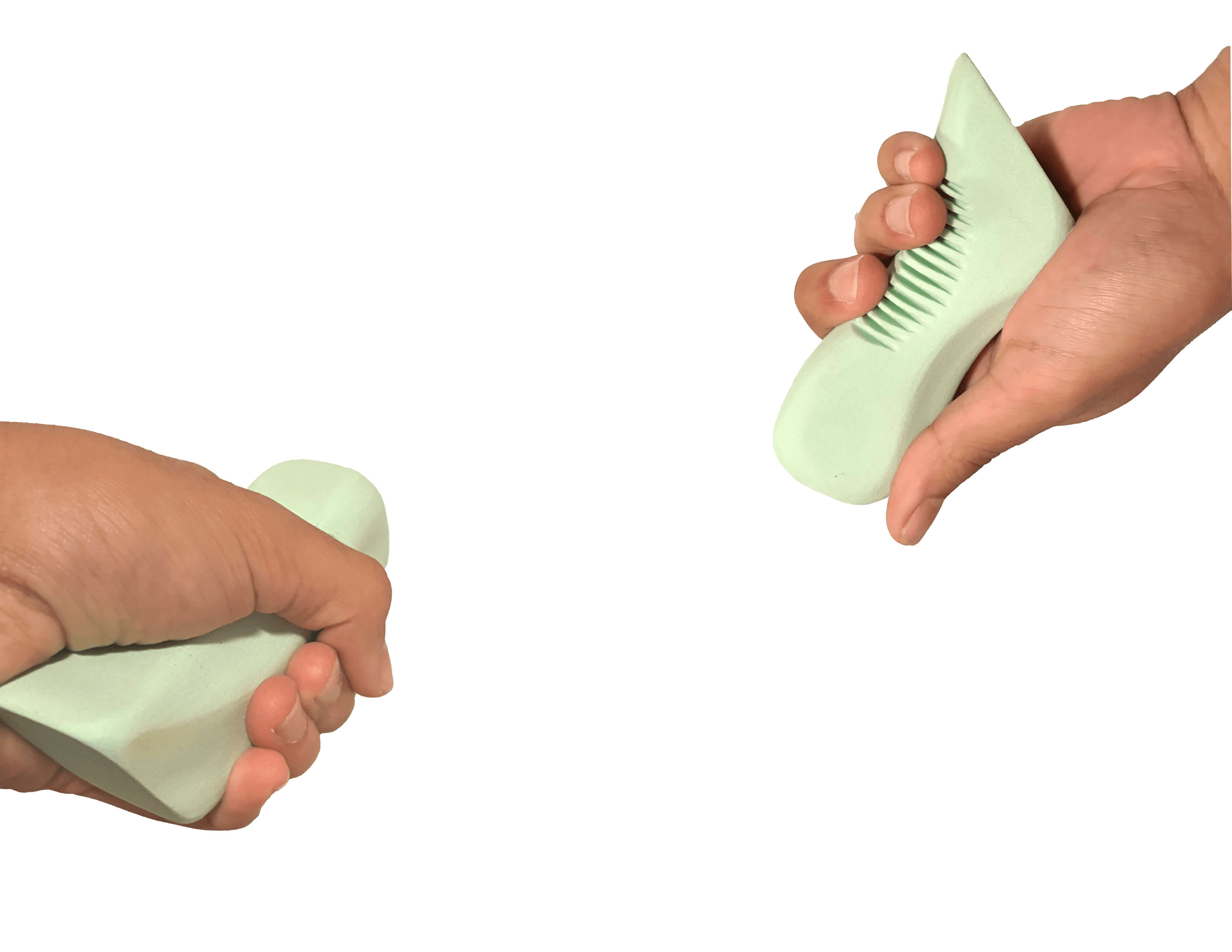
I created foam studies of the grip and structure for a new concept where the microplane would be placed on the table.
form study
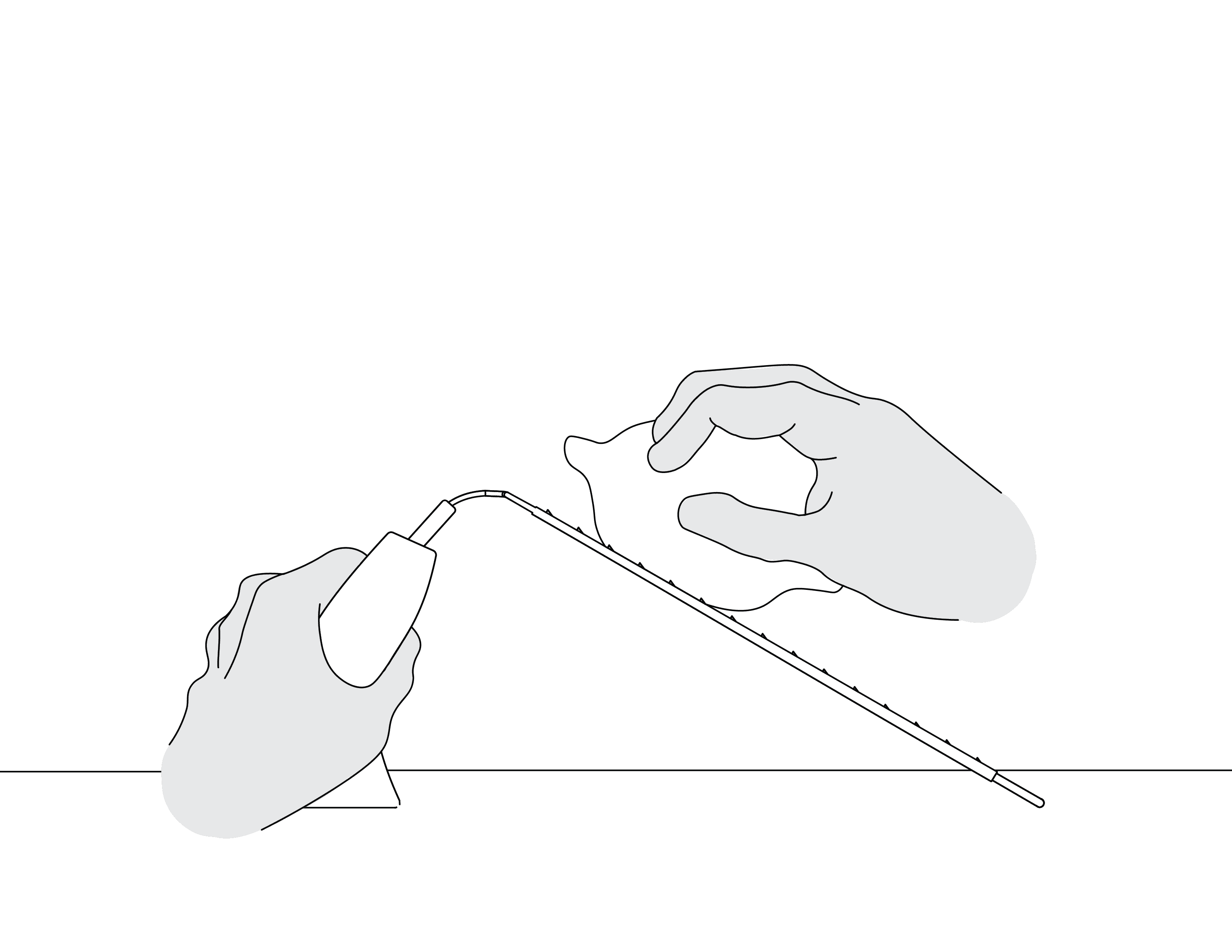
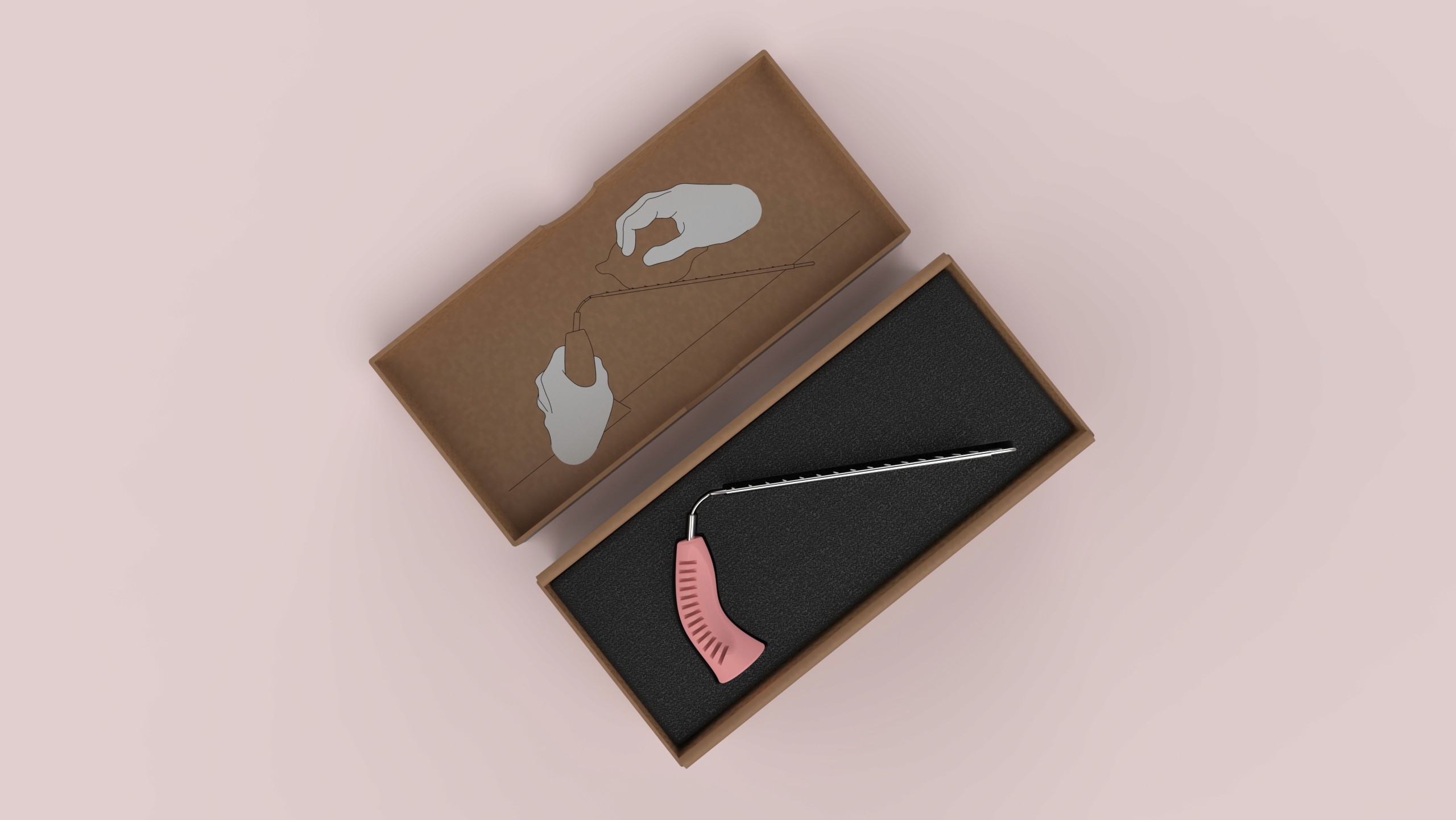
The microplane is intended to be used two-handed, place firmly on a flat surface.
scale and use
MICROPLANE
MICROPLANE
what:
This is a redesign of a classic microplane, used for zesting and finely grating. It aims to address user issues and create a unique take on a pre-existing product
why:
The main intention of the redesign was to address the wrist strain that comes with using a traditional microplane. By having two points of contact with the table, it redirects that strain into the surface it rests on. This increases accessibility of the product and broadens the range of users.
who:
This was a solo project, taking place over the course of 4 weeks.
I created foam studies of the grip and structure for a new concept where the microplane would be placed on the table.
form study
I created foam studies of the grip and structure for a new concept where the microplane would be placed on the table.
form study
hand strain
hand strain
wrist strain
wrist strain
thumb on grates
thumb on grates
I used a pre-existing microplane to help determine the most prevalent pain points in the product. The biggest issues I found were with physical strain and danger of use.
pain points
Three modifications to the existing microplane to address different pain points; the most effective was the non-slip as it allowed for different angles with high amounts of pressure, but it didn't allow for much further exploration from a design perspective.
product hacks
non-slip
thumb protection
two-way grip
non-slip
thumb protection
two-way grip
form study cont.
Because of it's unique form and solution to pain points, I finalized a concept of the microplane for use on the table. I explored the form more through rapid sketch visualization.
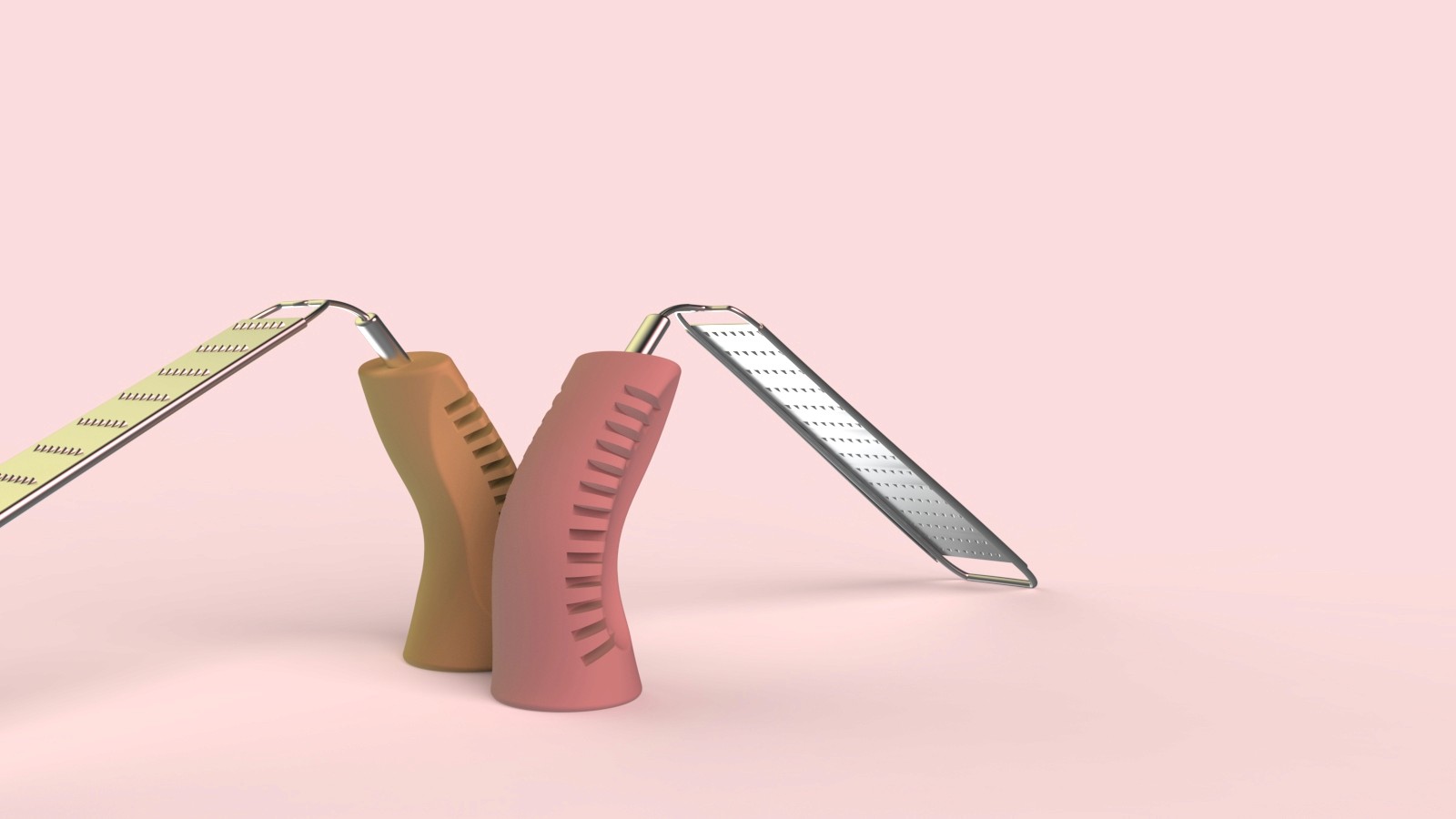
I then progressed onto rapid visualization in rendered form to get a clearer idea of how concepts might manifest.
BACK TO TOP
next
The microplane is intended to be used two-handed, place firmly on a flat surface.
scale and use
The microplane is intended to be used two-handed, place firmly on a flat surface.
scale and use
CASE STUDIES
HOME